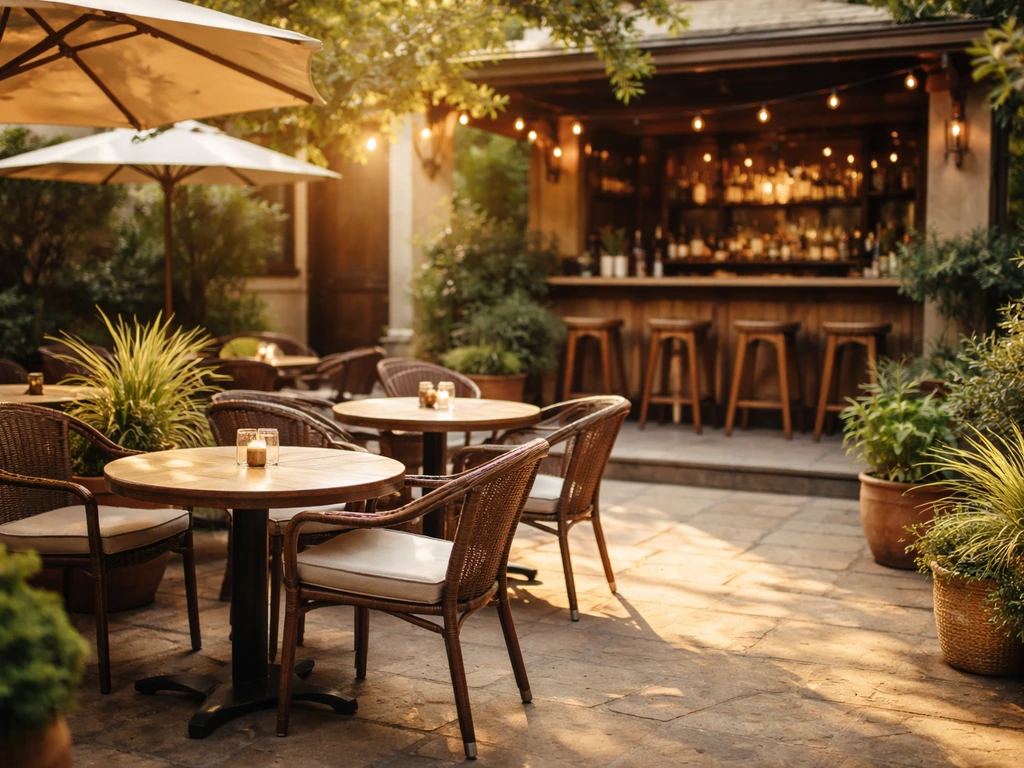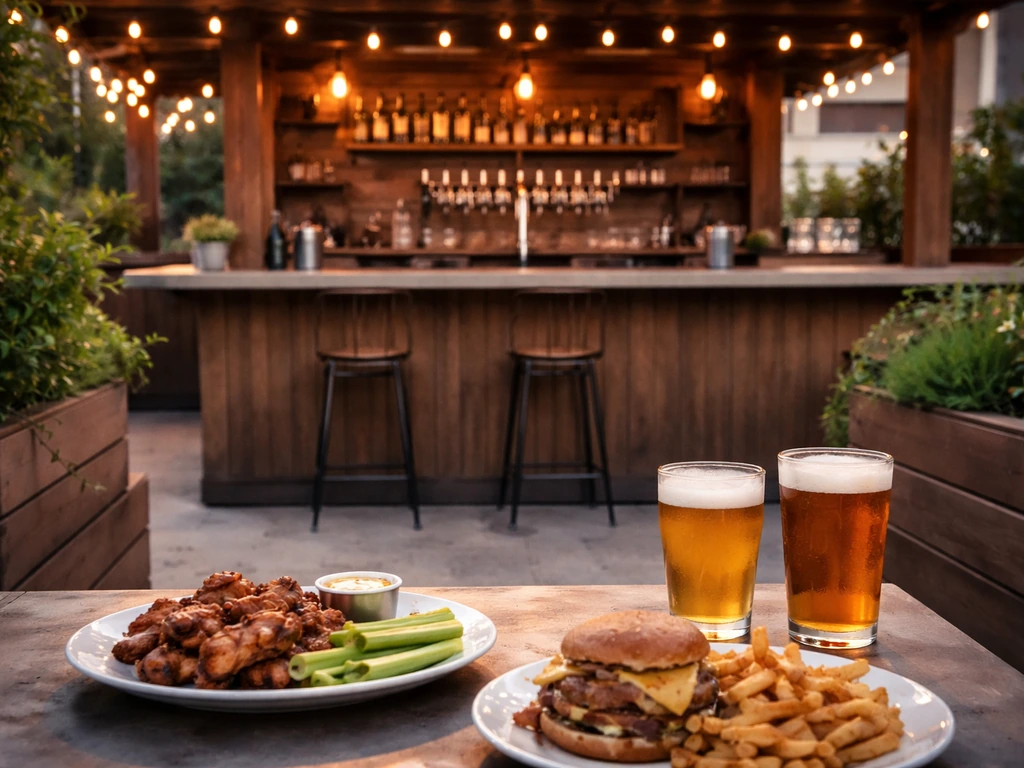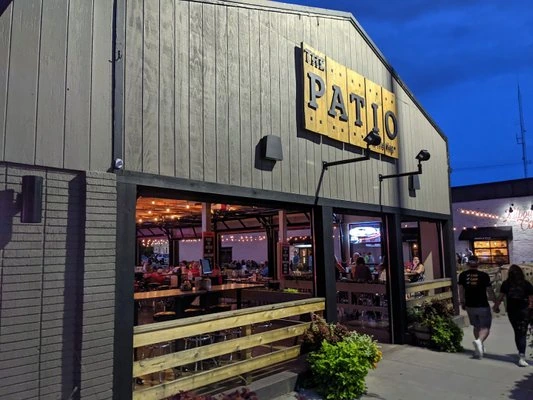
Faculty Tables and Patio reviews on Patio Bar Reviews are editorial write-ups that break down every dimension of an outdoor dining experience, from the quality of the furniture and shade cover to the drinks list, noise level, and whether you can actually book a table for a group without a headache. They're written for people who want to know exactly what they're walking into before they show up, not just a star rating and a handful of anonymous comments.
Faculty Tables and Patio Reviews: Choosing the Best Patio

Peter Morrison
20 Jul 2026

Who these reviews are actually for
I write these pages for a pretty specific kind of reader: someone who has been burned by a patio that looked gorgeous in photos but turned out to be a sun-blasted concrete slab with no umbrellas and a two-hour wait. Whether you're planning a first date, coordinating a birthday dinner for fifteen people, bringing the kids along, or scouting a venue for a private event, the reviews are structured to answer your actual question, not just 'is it good?' but 'is it good for my situation?'
- Casual diners looking for a solid outdoor spot on a weeknight without overthinking it
- Date-night planners who need to know about ambiance, noise level, and whether the lighting is flattering after dark
- Groups of six or more who need to understand reservation policies, table configurations, and whether the patio can actually accommodate everyone
- Families with kids who want to check accessibility and crowd noise before committing
- Event organizers comparing private patio options across a city and needing consistent, side-by-side detail
What you'll find across the whole site
Patio Bar Reviews organizes content at two levels: individual venue pages and city-level or occasion-level roundup pages. On the venue side, you get a deep editorial summary of a single patio, with practical details, experience notes, and links to external ratings from Google, TripAdvisor, and Restaurantji so you can cross-check the editorial take against broader audience opinion. On the city and category side, you get curated lists grouped by type, so if you're looking at BBQ patios, cocktail bars with good outdoor seating, or pub patios, there's a category landing page pulling those together.
Some of the venue pages on this site cover well-known patio experiences tied to specific events or major venues, like the White Sox Patio Party, which is a completely different animal from a neighborhood restaurant patio. For coverage of venue-specific patios tied to major stadium experiences, see coca cola scoreboard patio reviews for a focused write-up of that setting. Others cover bar and restaurant patios with their own strong identities, like Club South and the Coca-Cola Scoreboard Patio. And then there are city-specific pages like Faculty Tables and Patio Kansas City, which focus the lens on a particular local scene rather than a single address. For coverage of Portugal's capital, see WOT Lisbon patio reviews for Lisbon-specific patio summaries and venue pages. All of those pages follow the same editorial structure, so once you know how to read one, you know how to read them all.
Everything a review covers
Every Faculty Tables and Patio review, and every other venue review on this site, is built around the same core checklist of subtopics. I try to cover each one because skipping any of them is exactly how you end up at a place that's great on paper but miserable in practice.
- Patio atmosphere: overall vibe, visual design, lighting at different times of day, and whether the outdoor space feels intentional or like an afterthought
- Seating and furniture: chair and table comfort, variety of seating types (bar stools, lounge chairs, high tops, standard dining), shade and weather cover, heating options for cooler evenings
- Food quality: what the menu looks like, standout dishes, whether the kitchen actually delivers outdoors at the same standard as indoors
- Drink selection: cocktail list depth, local beer and wine options, outdoor bar setup, and whether service is fast enough that you're not waiting 20 minutes between rounds
- Service: staff attentiveness specifically on the patio, how well they handle large groups, and whether the outdoor section feels like a priority or an afterthought
- Value: what you're actually getting for the price, not just whether it's cheap or expensive
- Accessibility: ADA-compliant ramp access (the 2010 ADA Standards set a maximum slope of 1:12 for ramps), wheelchair-accessible table clearances, and whether the patio layout realistically works for mobility devices
- Crowd and noise: typical crowd profile, peak-hour noise levels, and whether a conversation is possible without shouting
- Reservation and policy notes: whether walk-ins are realistic, booking windows, cancellation terms, and any group-size thresholds that trigger special policies (for example, some venues require calling an events line for parties over 20)
- Photos and media: visual documentation of the actual space so you're not surprised by what you find
How to read a review and understand the scores
Here's something I want to be upfront about: Patio Bar Reviews does not run a proprietary algorithm that spits out a weighted composite score from a secret formula. What you get instead is a synthesis approach. Each venue review pulls together editorial observations from on-site visits and experience notes, alongside publicly available rating data from platforms like Google, TripAdvisor, and Restaurantji. That means you can see both the editorial take and what the broader audience is saying, and you can weigh them yourself.
Within the editorial summary, you'll find a practical checklist format that flags specific strengths and weaknesses under each subtopic. Think of it less like a report card and more like notes from a friend who has already been there. Where a venue has earned a callout for something genuinely good, like exceptional shade coverage or an unusually strong local draft list, that's noted directly. Where there's a red flag, like narrow aisle spacing that makes wheelchair navigation difficult or a noise level that makes table conversation nearly impossible at peak hours, that's in there too. The goal is to give you enough signal to make a decision that fits your specific situation.
What the external ratings mean
When a review references a Google average of, say, 4.2 stars or a Restaurantji breakdown, those numbers are drawn directly from those platforms and cited as-is. They reflect a large volume of general diner opinion and are useful for a sanity check. The editorial commentary on this site adds the patio-specific layer that general review platforms almost never capture in their aggregated scores, because most diners rating a restaurant are rating the full experience, not specifically the outdoor seating quality, shade situation, or group-table layout.
Venue pages vs. city pages: knowing which one to use
A venue page is for when you already have a specific place in mind, or when you've been pointed toward a particular patio and want the full breakdown before you commit. It goes deep on one address: the layout, the menu highlights, the booking process, the accessibility details, and the honest assessment of what kind of occasion it actually suits.
A city page, like the Faculty Tables and Patio Kansas City page, is for when you're starting with a location and figuring out what your options are. For a full list and in-depth evaluations, see the Faculty Tables and Patio Kansas City reviews for venue-by-venue details and practical notes. City pages give you a curated overview of multiple patios in an area, organized by type or occasion, with enough summary detail to narrow your list down to two or three candidates. From there, you click through to the individual venue pages to get the specifics that will actually decide your pick.
The practical workflow is: start at the city or category level to orient yourself, use the summaries to filter out obvious mismatches, then go deep on the one or two venue pages that look most promising. You'll save yourself a lot of scrolling by not trying to read every venue page cold from the homepage.
Sample summaries and how to compare patios side by side
Here's what a short venue summary entry looks like in practice. Imagine you're looking at two patios in the same city and trying to decide between them for a Saturday evening group dinner. The summary for each venue gives you a two-to-three sentence snapshot: the vibe, the seating capacity and setup, one food or drink highlight, and one honest caveat. That's enough to make a first cut. If the summary says 'lively bar crowd, high noise at 7 PM, limited shade,' you already know it's not the right call for a quiet catch-up dinner, even if the food is excellent. For another relevant comparison, see white sox patio party reviews.
The comparison table format below shows how to line up multiple venues against the attributes that matter most for a given decision. This kind of side-by-side view is especially useful when you're coordinating for a group and need to get buy-in from other people who haven't read the full reviews.
| Venue | Atmosphere | Seating Type | Noise Level | Accessibility | Best For | Avg. Rating (External) |
|---|---|---|---|---|---|---|
| Faculty Tables and Patio (Kansas City) | Relaxed, neighborhood feel | Mixed dining and lounge | Moderate | Check venue page for ramp/ADA detail | Groups, casual dining | See venue page |
| White Sox Patio Party | High-energy, event-driven | Bleacher and standing areas | High | Stadium ADA provisions apply | Sports crowds, large groups | See venue page |
| Club South Patio | Upscale casual, evening-focused | Standard dining, some lounge | Moderate to high | Check venue page | Date night, small groups | See venue page |
| Coca-Cola Scoreboard Patio | Stadium-anchored, festive | Mixed, open-air | Very high on event days | Venue-level ADA compliance | Events, large parties | See venue page |
A few interpretation tips when reading a comparison table like this: noise level is one of the most subjective attributes, so always cross-reference with the editorial notes in the venue page rather than treating the label as absolute. Accessibility ratings should be verified against the specific ADA criteria cited in the venue review, because 'accessible' can mean anything from a fully ramped entrance with compliant table clearances to just 'there are no stairs at the front door.' And 'best for' is a starting point, not a ceiling: a patio listed as best for date night might also be perfectly good for a small group dinner, just check the reservation policy for your party size.
How to use filters and search to find the right patio
The site's category structure is the primary filtering tool available right now. Instead of a multi-attribute filter UI with sliders and checkboxes, the organization runs through editorial categories: Pub Patio Reviews, BBQ Patio Reviews, Cocktail Patio Reviews, and so on. That means the most efficient way to filter is to start with the category that matches your occasion or preference type, then read the short summaries within that category to narrow down.
In practice, here's how I'd combine the available organization tools to find what you're looking for:
- Choose your category first: BBQ if you're after a grill-forward outdoor experience, Cocktail Patio if the drinks list matters as much as the food, Pub Patio for a more laid-back beer-and-snacks setup
- Cross-reference with a city page if you have a location constraint, since the city pages pull together venues from multiple categories in one area
- Use the occasion framing in each summary (date night, group, family) as your next filter, since that's baked into the editorial structure of every page
- Check the reservation and policy notes section before you commit, because a patio that looks perfect might have a booking window that doesn't work for your timeline or a group-size minimum that affects your plans
- Use the external rating references (Google, TripAdvisor scores cited in each review) as a volume-of-opinion check on the editorial assessment
If you're looking for something specific that doesn't surface easily through the category structure, the contact email at [email protected] is the right channel to ask. The editorial team can point you toward the most relevant pages or let you know if a venue you're looking for is in the pipeline.
Choosing the right patio for your occasion
Different occasions have genuinely different requirements, and the same patio that's perfect for a birthday dinner for ten can be completely wrong for a first date. Here's how I'd think through the decision for the four most common use cases.
Date night
For a date, the two things I always check first are noise level and lighting. A beautiful patio that's so loud you're lip-reading by 8 PM is not a date patio, no matter how good the cocktail list is. Look for venues where the editorial notes describe moderate noise and intentional evening lighting, whether that's string lights, candlelit tables, or a design that separates the bar crowd from the dining section. Check the reservation policy: most solid date-night patios take reservations, and showing up without one on a Friday or Saturday is a gamble. Also, look at the seating notes for table spacing. Cramped high-tops inches from other parties are fine for a casual drink but uncomfortable for a real dinner.
- Decision checkpoint: Is noise level described as moderate or low at dinner hours?
- Decision checkpoint: Does the venue take reservations, and what's the booking window?
- Decision checkpoint: Is there dedicated dining seating rather than only bar or lounge options?
- Decision checkpoint: Does the review mention evening ambiance or lighting specifically?
Groups of six or more
Groups need to think about table configuration before anything else. A patio with beautiful seating for two-tops is not the same as a patio that can push tables together for eight people without blocking an aisle or creating a service nightmare. Read the seating and furniture section of the review specifically for mention of large-table setups or communal tables. Then go straight to the reservation and policy notes: many venues have a threshold, often around six to eight people, where they require advance notice or a dedicated reservation call. OpenTable, sample reservation/cancellation policy (Diners' Choice listing) shows how listings expose restaurant-level reservation and cancellation fields (credit-card holds, cancellation windows, and per-person cancellation fees) that venues and readers should capture for booking guidance OpenTable — sample reservation/cancellation policy (Diners' Choice listing). Some require a minimum spend or a deposit for parties over a certain size, which is worth knowing before you're committed.
- Decision checkpoint: Does the review mention group-friendly table configurations or communal seating?
- Decision checkpoint: What's the group-size policy, and is there a minimum spend or deposit requirement?
- Decision checkpoint: Is the service noted as handling large groups well, or does the review flag slow patio service?
- Decision checkpoint: Is the noise level something your group can work with, or will it become an issue?
Family outings
Families need accessibility details and crowd profile more than anything else. Check whether the patio has ADA-compliant access, which under the 2010 ADA Standards means ramp slopes no greater than 1:12 and adequate clear floor space around tables for wheelchair users. The 2010 ADA Standards for Accessible Design (ADA Standards for Accessible Design, ADA.gov) define measurable criteria for outdoor patios, including maximum ramp slope of 1:12, minimum clear floor space, and ramp landing and width requirements that patio reviews should record and verify ADA Standards for Accessible Design — ADA.gov. Also check the crowd notes: a patio that describes itself as a late-night bar scene is not the right call for a family with young kids, even if the food is great. Look for venues where the review mentions a mixed crowd, earlier peak hours, and enough space between tables that kids can move around without disturbing other diners.
- Decision checkpoint: Is ADA-compliant access specifically mentioned in the accessibility section?
- Decision checkpoint: Does the crowd profile include families or mixed ages, not just a bar-heavy crowd?
- Decision checkpoint: Are peak hours early enough to work with a family schedule?
- Decision checkpoint: Does the seating section describe enough space for strollers or high chairs if relevant?
Private events and larger parties
For private events, the booking and policy section of a venue review is the most important thing on the page. Some patios have a semi-private or fully private section that can be reserved for events, but that detail isn't always obvious from a general review. When a review notes that a venue recommends calling an events line for parties over 20, that's a signal that private or semi-private arrangements are possible. It also means you should contact the venue directly well in advance, since those arrangements typically involve permit-level logistics on the venue's end, including possible liquor-license endorsements for outdoor service, liability insurance requirements, and sometimes municipal outdoor-dining permit conditions depending on the city.
- Decision checkpoint: Does the review mention a private or semi-private patio section available for events?
- Decision checkpoint: Is there an events contact or events line noted in the booking section?
- Decision checkpoint: What's the lead time for group bookings at this venue?
- Decision checkpoint: Does the venue have documented cancellation terms for group reservations?
How to submit, correct, or update a review
The site is editorially authored, which means reviews are written and maintained by the Patio Bar Reviews team rather than built from open user submissions. If you've been to a venue covered on the site and you have a correction, a detail that's out of date, or additional information that would help other readers, the right channel is the editorial contact email: [email protected]. That's the same address for general feedback, questions about a specific review, and requests to have a venue added to the coverage list.
For photo-related issues, including copyright disputes or requests to remove images, the site has a formal DMCA process with a designated takedown contact at [email protected]. If you need to submit a copyright notice or counter-notice, the DMCA page on the site documents the specific information required for each type of request. That process exists separately from general editorial feedback, so use the correct channel depending on whether your issue is about written content or about specific images.
One practical note: if you're submitting a correction for something like a reservation policy change, a venue closure, or updated hours, the more specific you can be, the faster the editorial team can act on it. A message that says 'the cancellation policy listed is outdated, the venue now requires 48 hours notice and a credit card hold' is much easier to verify and update than a general 'this info is wrong.' The more detail you provide, the more useful your contribution is to everyone reading that page after you.
FAQ
What specific topics do “faculty tables and patio” reviews on Patio Bar Reviews cover?
Reviews cover patio atmosphere (ambience, sun/shade, greenery), seating and furniture (comfort, layout, table sizes), food quality and menu suitability for patios, drink selection (cocktails, beer list), service (speed, patio-trained staff), value/price, accessibility (ramps, clearances, restroom access), crowd and noise levels, reservation and policy notes (groups, deposits, cancellation), weather/season adaptability (heaters, umbrellas), and practical booking tips.
Who are these reviews written for?
They’re aimed at casual diners, date-night planners, groups and parties, families, and event/bookers — each venue writeup includes visit-type guidance (best for dates, groups, kids, events) so readers can match a patio to their occasion.
What readers will get on a venue page and city-level patio pages?
Venue pages provide an editorial summary, practical checklists, visit-type guidance, citations to external review aggregates (Google, Restaurantji, TripAdvisor), sample highlights and red flags, booking/contact details, reservation policy notes, and photo examples. City/local pages list neighborhood patios (e.g., Faculty Tables and Patio — Kansas City) and synthesize venue-level findings to compare multiple options.
What data sources does Patio Bar Reviews rely on to build accurate venue summaries?
Primary inputs include editorial site visits and observations, third-party review platforms (Google, Yelp, TripAdvisor, Restaurantji), reservation/listing services (OpenTable or similar), venue websites and menus, official contact with venues (events line, management), and publicly available municipal records (permit/sidewalk-encroachment info) and ADA guidance for accessibility verification.
Is there a published numeric rating formula or multi-attribute filter UI on the site?
No public, detailed rating weights or algorithm were found. The site appears to synthesize editorial context with cited external aggregates rather than publish a proprietary numeric formula. For exact weights/filters, readers should request methodology directly from Patio Bar Reviews editorial/product staff via the contact email.
How can I verify or request corrections to a review, listing details, or photos?
Use the site’s documented public channels: the Contact email for editorial corrections and feedback, and the DMCA takedown contact for copyright/photo disputes. The Privacy Policy also documents rights to request access, correction, or deletion of personal data.