To pick the right local beer patio and kitchen, search Google Maps or Yelp with a phrase like 'beer patio grill [your city],' apply the outdoor seating and rating filters, then read the 10 most recent written reviews on each shortlisted spot. Look specifically for what reviewers say about patio comfort, draft beer quality, and food consistency, not just the star average. A 4.2 with 300 recent reviews that mention cold beer and quick kitchen service beats a 4.6 with 40 reviews and nothing posted in six months.
Local Beer Patio and Kitchen Reviews: How to Choose Nearby

Peter Morrison
29 Apr 2026
How to find local beer patio and kitchen reviews fast
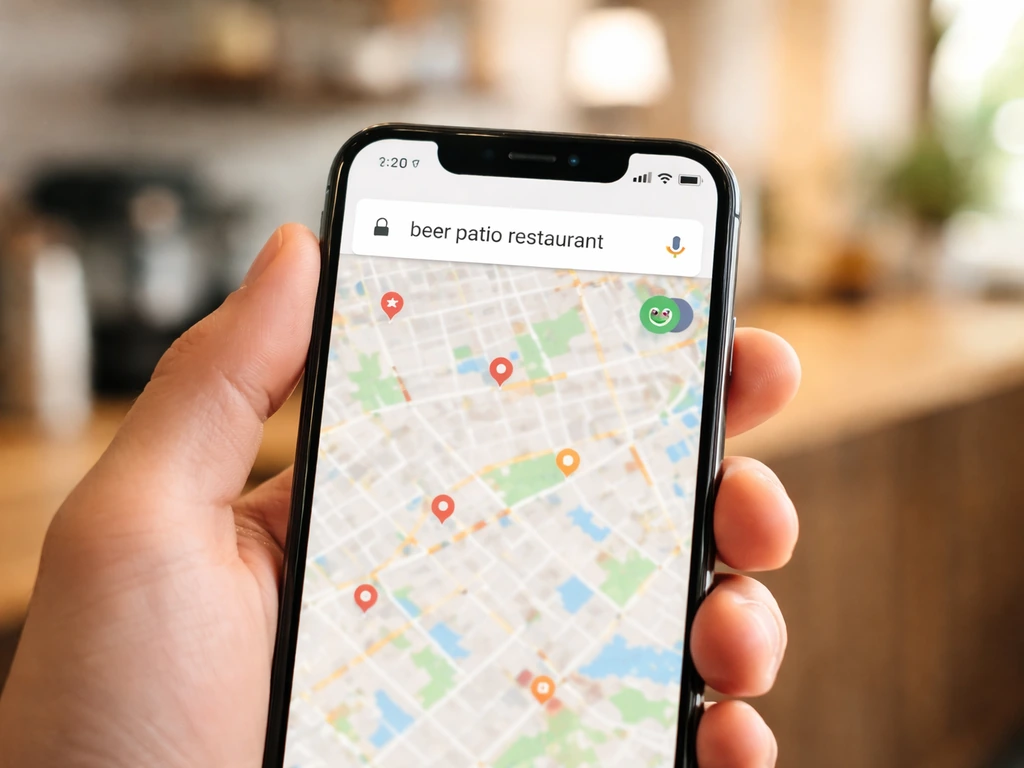
Start with three platforms: Google Maps, Yelp, and Tripadvisor. Each one has slightly different strengths for this kind of search, and using all three takes maybe ten minutes.
On Google Maps, search 'beer patio restaurant' or 'patio bar grill' plus your neighborhood or city. Then hit the filters row, you can filter by Open Now, Rating (set it to 4.0+), Price, and amenity attributes like 'Good for groups' or 'Accepts reservations.' Google doesn't have a dedicated 'patio' filter, but searching the phrase directly surfaces listings where patio shows up in reviews and attributes.
On Yelp, use the search bar with terms like 'beer garden,' 'patio bar,' or 'outdoor grill,' then hit 'All Filters' to layer on features like Outdoor Seating, price range, and distance. Yelp's review order blends recency, user votes, and quality signals, so the first review you see isn't always the most recent. Make a habit of scrolling and checking post dates directly, or sort by newest to spot recent kitchen or patio complaints.
On Tripadvisor, pull up a listing and use the 'Most Recent' sort on the review tab. This orders reviews by publish date, which is the most useful view for catching anything that's changed in the last few months, a kitchen turnover, a newly covered patio, a drop in beer quality. One thing to watch: Tripadvisor allows reviews to be submitted up to 12 months after a visit, so a 'recent' post date doesn't always mean a recent visit. Check if the reviewer mentions a specific season or event.
- Google Maps: best for fast attribute filtering, photo volume, and seeing reply patterns from owners
- Yelp: best for written review depth, outdoor seating filter, and community Q&A
- Tripadvisor: best for sorting by recency and reading detailed, longer-form reviews with context like group size and visit purpose
What patio reviews are really telling you
When someone reviews a patio, they're rarely being scientific, but the patterns in what they mention are genuinely useful. The things that come up repeatedly across different reviewers are almost always real.
Atmosphere and vibe
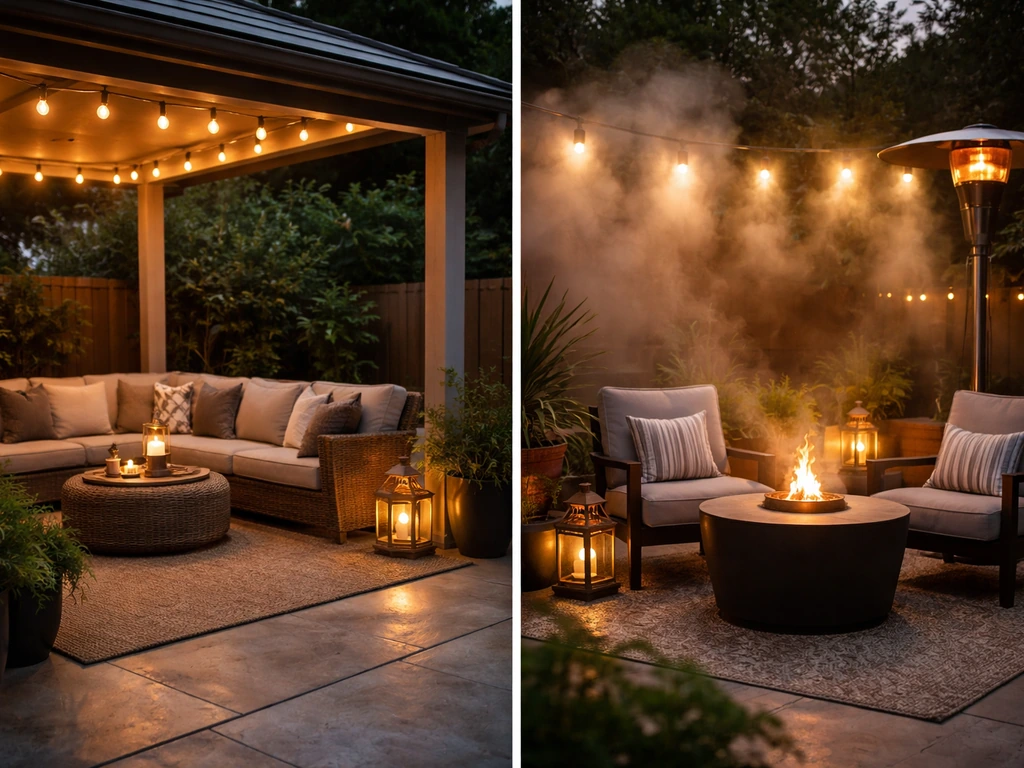
Look for descriptors that match what you're after. Reviewers who mention string lights, a relaxed crowd, or 'good for a date night' are telling you something different than reviewers who mention 'loud,' 'sports TVs everywhere,' and 'great for a big group.' Neither is wrong, they just signal different vibes. If your goal is a low-key weeknight beer and burger, a raucous game-day patio that seats 200 isn't the right call, even if it scores a 4.5.
Comfort and physical setup
The practical stuff matters more than people admit. Watch for mentions of shade, overhead cover, misters, or heaters, especially if you're going in peak summer or shoulder season. A patio that's fully exposed in July afternoon sun is miserable no matter how good the beer list is. If multiple reviewers mention 'no shade' or 'gets too hot,' factor that into your decision. Same with seating, wooden benches for two hours get old fast. Look for references to actual chairs, cushions, or lounge setups.
Noise level and environment
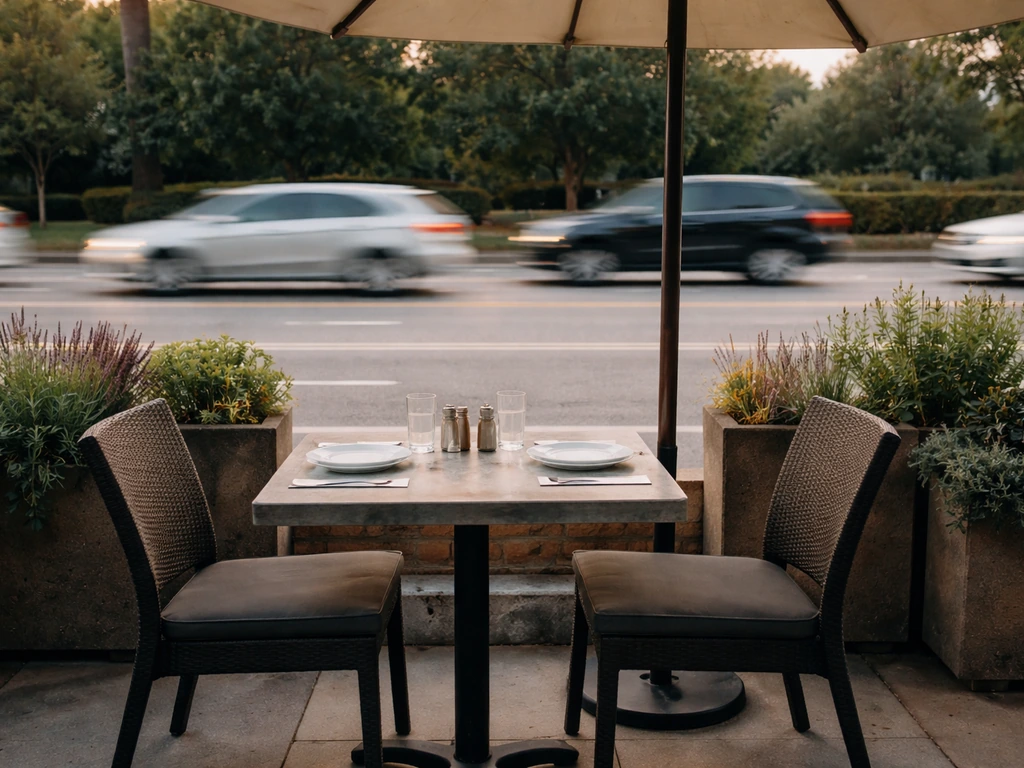
If conversation matters to you (date night, catching up with friends), search review text for words like 'loud,' 'music,' 'traffic,' or 'highway.' Patios near busy roads or with live bands can be great for some visits and a dealbreaker for others. For family outings, look for 'kids,' 'family-friendly,' or 'plenty of space', a venue like Kelley's Pub and Patio, for instance, might skew toward a lively pub crowd that's not ideal for a family dinner.
How to read kitchen reviews for a patio bar
Patio bar kitchens vary wildly, some are full-service grills turning out serious food, others are just a window passing out fried appetizers. Reviews will tell you which you're dealing with if you know what to look for.
Food quality and consistency
The most reliable signal in kitchen reviews isn't the compliments, it's whether multiple reviewers on different visits mention the same specific items being good or bad. If three different people say 'the burger was incredible' over six months, that's a consistent kitchen. If one person loves it and two people say their food arrived cold or took 45 minutes, that's a consistency problem. Look for the pattern, not the outlier.
Menu breadth and value
A good patio kitchen should offer enough variety that everyone in your group finds something. If you're going with people who have dietary restrictions, search review text for 'vegetarian,' 'gluten-free,' or 'options' before you go. For value, look for reviewers who mention portion size relative to price, comments like 'pricey for what you get' repeated across reviews are a real warning sign, especially since you're likely adding drinks to the tab.
Speed and service under outdoor conditions
Outdoor service is harder than indoor. Servers cover more ground, wind blows napkins away, and large groups at long picnic tables are logistically awkward. Reviews that mention fast, attentive service on a busy patio are more impressive than indoor service praise. If reviewers consistently mention long waits specifically on the patio, that's a real signal, some kitchens just can't keep up when the patio fills up on a nice Friday.
What beer and drink reviews should actually tell you
Beer quality is where a lot of patio bar reviews fall short, most people just say 'good beer selection' without specifics. But there are reliable signals worth hunting for.
Selection and local options
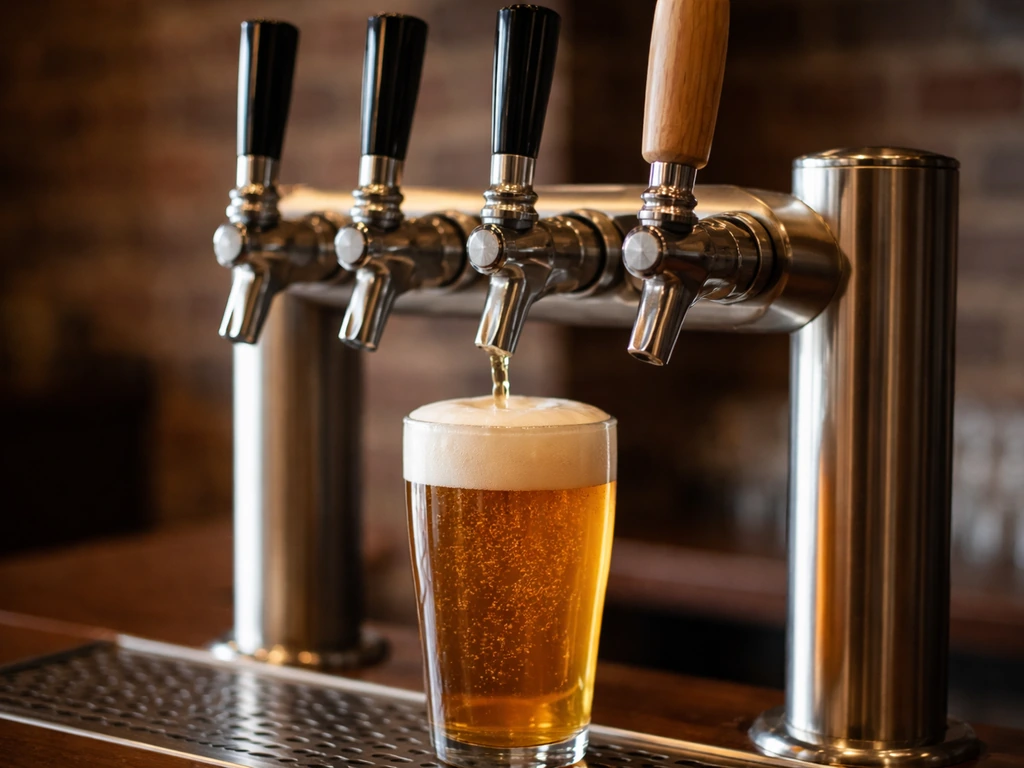
Reviewers who specifically mention rotating taps, local craft options, or seasonal picks are telling you the bar is actively managing its beer program. A static tap list of only national macros isn't necessarily bad, but if you care about variety, look for those specific mentions. Some spots worth comparing, like The Yard Patio Beer Garden and The Keg and the Patio, tend to attract reviewers who get into detail on beer lists, which makes them useful reference points for what 'good selection' actually looks like in a written review.
Draft quality red flags
Draft quality is something casual reviewers actually notice even if they don't name the cause. Watch for phrases like 'flat beer,' 'weird taste,' 'too foamy,' or 'not cold enough.' These can indicate dirty tap lines or dirty glassware, both of which are real problems at high-volume patio bars that run dozens of taps. Having a lot of taps isn't automatically a good thing: a bar with 30 taps needs to sell through all of them regularly or the slower-moving lines sit between cleanings and the beer quality suffers. A smaller, focused draft list with fast turnover often means better pours.
Service speed for drinks
On a busy patio, the difference between a good and a bad experience often comes down to whether your glass stays full. Reviews that mention 'drinks came fast,' 'bartender was on top of it,' or 'never waited long for a refill' are genuine quality signals. Conversely, repeated complaints about slow bar service or forgetting drink orders on a crowded patio tell you something real about capacity and staffing.
How to compare multiple spots fairly
Once you've got three or four options, the mistake most people make is just comparing star averages. A place sitting at 4.3 with 600 reviews and consistent recent praise is almost always a better bet than a 4.6 with 50 reviews that are two years old. Here's how to compare properly.
Look at the rating distribution, not just the average
A 4.2 average can mean everyone gave it a solid 4 stars, consistent, reliable experience. Or it can mean half the people gave 5 stars and half gave 1 star, wildly polarized, which usually signals inconsistency. Most platforms show you the rating breakdown by star level. A healthy patio bar should have a big lump at 4 and 5 stars, with very few 1-star reviews. If you see a big spike at 1 star alongside the 5-stars, read those 1-star reviews, there's usually a specific issue (parking, a bad event, slow kitchen on weekends) that explains it.
Weight recency heavily
Reviews from 2022 or earlier are less useful than reviews from the past three to six months. Kitchens change staff, patios get renovated, beer lists shift. Tripadvisor's own ranking logic weights recent reviews more heavily, and Yelp's algorithm factors recency into ordering. When you're comparing spots, mentally note how recently the bulk of positive reviews were written. A venue that was great in 2023 but has thin, mixed reviews in 2025 and 2026 is showing you a trend.
Use photos to verify the patio setup
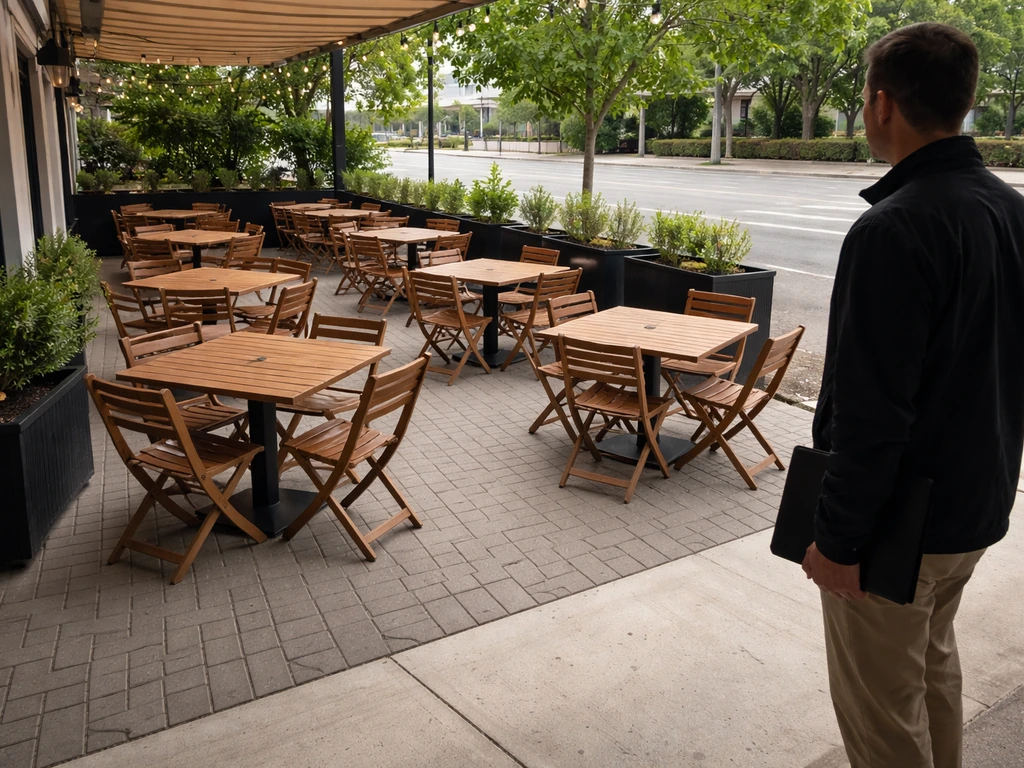
User-uploaded photos are underused. They're the fastest way to confirm whether a patio is actually a real outdoor space or just three tables next to a parking lot. On Google Maps and Yelp, filter photos by 'Outside' or browse the outdoor shots. You can often verify shade coverage, seating density, view quality, and whether there's an actual bar on the patio, all things that are hard to judge from text alone.
Spot recurring patterns across platforms
If a kitchen gets slow-service complaints on Yelp AND Tripadvisor, that's a real pattern. If it only shows up once on one platform, it might be a bad night or a difficult reviewer. Cross-referencing two or three platforms takes five extra minutes and filters out a lot of noise. When the same specific praise or complaint appears across multiple platforms from different people, treat it as fact.
Pre-visit checklist: confirm before you go
Reviews tell you what the experience has been. A quick pre-visit check tells you what it will actually be when you show up. Patio status changes more than people expect, weather damage, seasonal closures, private events, and permit issues can close an outdoor space with no update to the listing.
- Call or check the venue's social media to confirm the patio is open today — especially in shoulder seasons or after bad weather
- Confirm current hours; Google hours can lag behind seasonal changes by weeks
- Ask about reservations or typical wait times for the patio specifically, not just indoor seating
- Check for any live music or events scheduled — these can raise noise levels and extend wait times significantly
- Ask about daily specials or rotating taps if that influences your decision
- Confirm dietary accommodations if anyone in your group needs them — menus on third-party platforms often go out of date
- For larger groups (6+), ask if they can accommodate your size on the patio and whether a deposit or advance booking is needed
- Check the weather forecast and ask if the patio has cover, heaters, or misters based on the conditions expected
A practical scoring rubric for shortlisting
Here's a straightforward rubric you can run mentally (or jot down) when comparing two or three spots. Score each venue out of 5 in each category based on what you found in reviews and your pre-visit check. Add them up to get a composite. The category weights reflect what matters most for an outdoor beer-and-food outing.
| Category | What to look for in reviews | Max points | Why it matters |
|---|---|---|---|
| Patio atmosphere and comfort | Shade/cover, seating quality, vibe match for your group, noise level | 5 | A bad patio ruins the whole point of going outdoors |
| Draft beer quality and selection | Mentions of fresh pours, local/rotating taps, no flat/off-taste complaints | 5 | Core reason you're choosing a patio beer venue over a regular restaurant |
| Kitchen consistency | Repeated praise for specific dishes, no recurring complaints about cold food or long waits | 5 | Food quality separates a great outing from a mediocre one |
| Review recency and volume | Majority of reviews within 6 months, 50+ total reviews, consistent trend | 4 | Older reviews don't reflect today's experience |
| Service on the patio | Mentions of attentive staff, drink refills, handling large groups | 3 | Outdoor service is harder — good marks here are meaningful |
| Value | Portion size comments, price-to-quality mentions, no 'overpriced' pattern | 3 | You're adding drinks to food; value adds up fast outdoors |
A venue scoring 20 or above out of 25 is a strong choice. Between 15 and 19 means it's worth visiting but has one or two real weaknesses you should plan around, maybe the kitchen is slow, so you go on a weeknight instead of a Saturday. Below 15, there's probably a better option nearby worth the extra research.
For your shortlisting strategy: don't try to evaluate more than four spots at once. Pick the top two based on this rubric, do the pre-visit check on both, and go with whichever one clears the checklist cleanest. Most of the time, one obvious winner emerges. If they're genuinely tied, go with the one that has stronger recent reviews from the last 60 days, that's the freshest signal you have about what the experience will actually be right now. Spots like Keystone Pub and Patio are good to keep on your radar as benchmarks if you're building a longer comparison list across different neighborhoods.
FAQ
How can I tell from reviews whether the patio is actually comfortable for a group?
Use the photos to count real patio seating types, not just tables. If most images show tight rows, picnic benches with no backs, or only one shaded corner, expect comfort problems even if the reviews sound positive. For a group, also check whether outdoor photos show enough space around the bar for staff to circulate, since that correlates with refill speed mentioned in reviews.
What should I watch for in beer-related reviews to know the draft program is still strong?
Look for “seasonal” language and specific draft names or rotations, then compare how old those mentions are. If the bar talks about rotating taps or seasonal picks in the last few months but the most recent reviews stop mentioning beer, it can mean the beer program changed or reviewers are focusing on other aspects. If you can, check whether recent reviews mention “cold” pours or “proper foam,” which is more predictive than “good selection” wording.
Is a place that’s called family-friendly on reviews actually suitable for kids?
Don’t assume “family-friendly” means quiet. Confirm by searching review text for “loud,” “music,” “sports,” “birthday,” and “rowdy,” then see whether those words appear alongside “kids” or “family.” If the patio has TVs or a game-day vibe, families often report mixed results depending on time of day, so plan an earlier arrival if you go.
How do I assess dietary restrictions (gluten-free, vegetarian) using review text?
When dietary needs are involved, rely on specifics, not broad statements. In review text, look for “could accommodate,” “substituted,” “gluten-free bun,” “separate prep,” or “vegetarian options” and check whether multiple reviewers describe the same kind of success or failure. Also note whether complaints are about “availability” versus “taste,” because availability issues are fixable by calling ahead.
What do I do if a patio’s reviews look inconsistent, could it be closed or changed often?
Before going, check for “private event,” “buyout,” “ticketed,” “festival,” or “closed for renovation,” and then match that to review timestamps. If a patio frequently gets blocked by events or weather closures, reviews may look inconsistent because people are reviewing different versions of the venue. A quick pre-visit check is especially important if your trip date is a holiday weekend or near a recurring local event.
How can I tell whether slow reviews reflect kitchen speed or just patio service issues?
Verify both the patio and the kitchen workflow, because some places have “great patio” but “slow kitchen.” If reviews mention patio-specific wait times like “food took forever outside,” “servers forgot,” or “drinks came but entrees lagged,” that points to outdoor capacity issues rather than just cooking time. If you see the opposite, fast refills but late food, you can adjust expectations by ordering shared appetizers early.
What’s the best way to interpret a high rating that still seems risky?
If star ratings look high but the experience feels polarizing, check the distribution by reading the most recent 1-star and 2-star reviews. Look for repeated causes like “parking problems,” “staffing,” “wrong order,” or “taps not cold,” and confirm whether those complaints are mentioned recently. A polarized pattern with recent repeats often means it depends on day and staffing, so plan accordingly.
Do reviews indicate whether the patio is open reliably, or should I expect it to close early?
Treat “open now” as a starting point, then confirm patio hours specifically. Some restaurants list general hours but the patio closes early for weather, staffing, or permits. In reviews, search for “patio closed,” “moved inside,” or “outdoor area not available,” especially in spring, fall, and winter.
How reliable is the “pattern across multiple platforms” rule in your method?
Use cross-platform review timing. If Google, Yelp, and Tripadvisor all show recent mentions of the same issue like “too hot,” “no shade,” or “flat beer,” you can treat it as stable. If only one platform has the complaint, it could be a one-off bad visit, reviewer bias, or a misread listing, so it should influence your choice less.
How do I figure out whether the patio vibe fits my visit time (weeknight vs weekend)?
If you care about the vibe, look for review details tied to time and crowd, like “after 8 pm,” “weekends,” “happy hour rush,” or “early evening was chill.” Patio crowd expectations can flip within the same venue, so match review timing to your planned visit. When reviewers mention “relaxed,” confirm they also describe music volume or “talkable” noise levels, not just friendly staff.
What’s the most actionable sign that draft beer is poured poorly at a patio bar?
If you’re checking beer quality, glassware and temperature complaints matter more than “selection.” Prioritize phrases like “not cold enough,” “foamy,” “flat,” “weird taste,” and “warm glass,” and note whether they’re repeated in recent reviews. Also watch for whether reviewers mention a clean-looking bar or quick turnover, because dirty tap lines and slow draft movement can show up as consistent taste issues.
How can I choose between two spots if one has faster bar service but slower food reviews?
If you need a fast, predictable meal, look for repeated “quick service” mentions that are tied to the patio environment, not just indoor dining. When reviews say “never waited long for a refill” but “food arrived cold” or “entrees took a long time,” plan your order style (appetizers first, fewer items per person). For timing-sensitive plans, also avoid days where reviews mention long lines for the kitchen.
What quick pre-visit checks will reduce the chance of a bad patio experience?
If you want the best chance of a smooth visit, shortlist based on consistent recent themes, then run a quick “reality check” during your pre-visit step by confirming photos and recent comments about patio setup. Compare shade coverage, seating type, and whether servers appear to reach tables easily in photos. This reduces the risk of over-weighting text that’s accurate but not representative of your specific group size or arrival time.