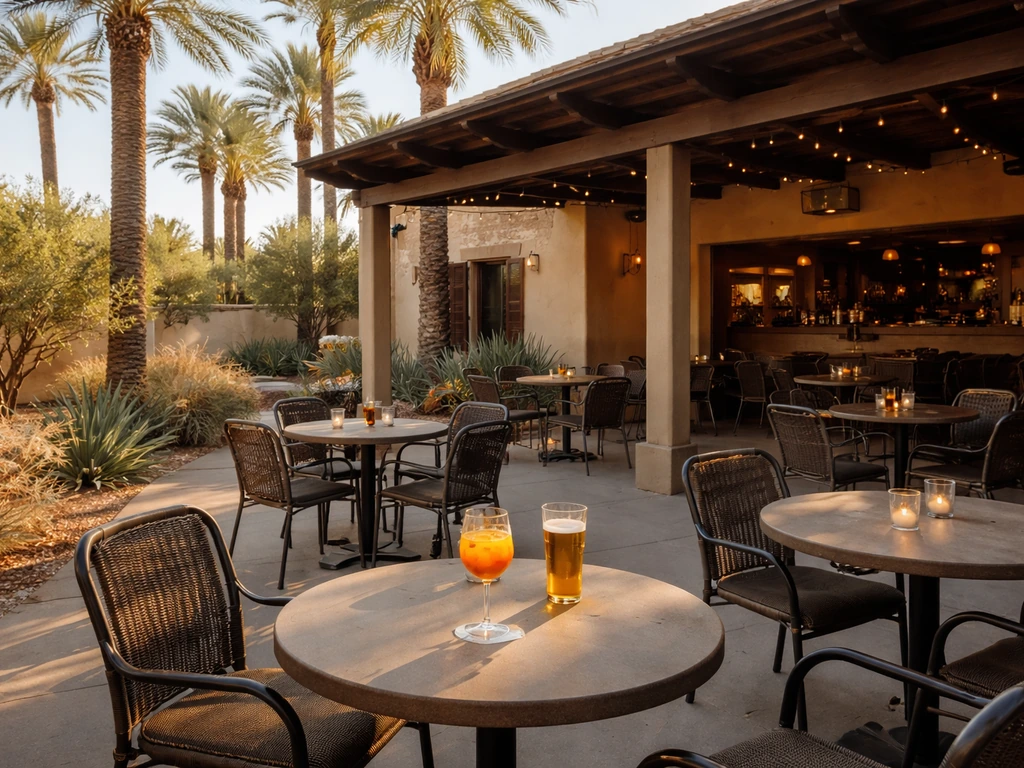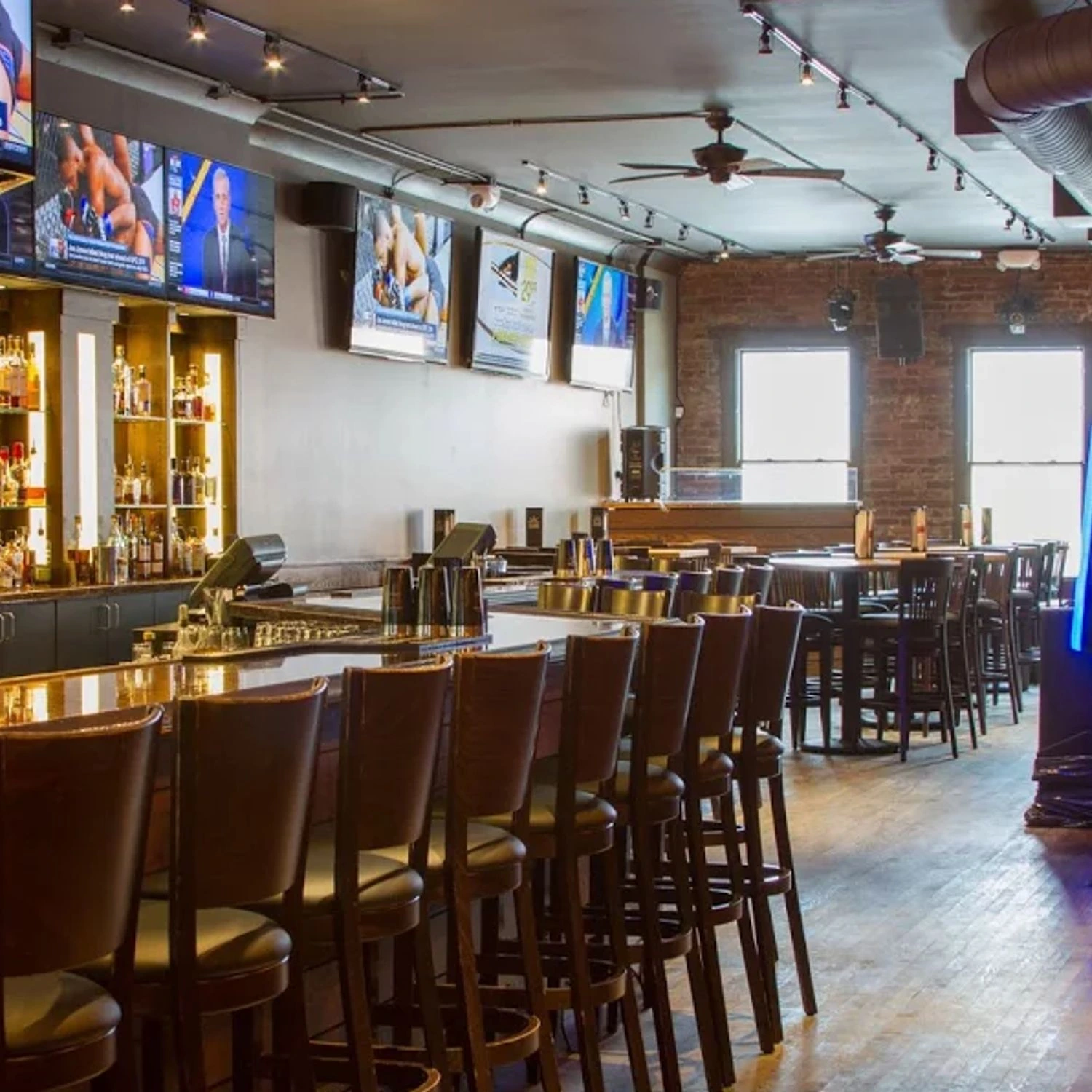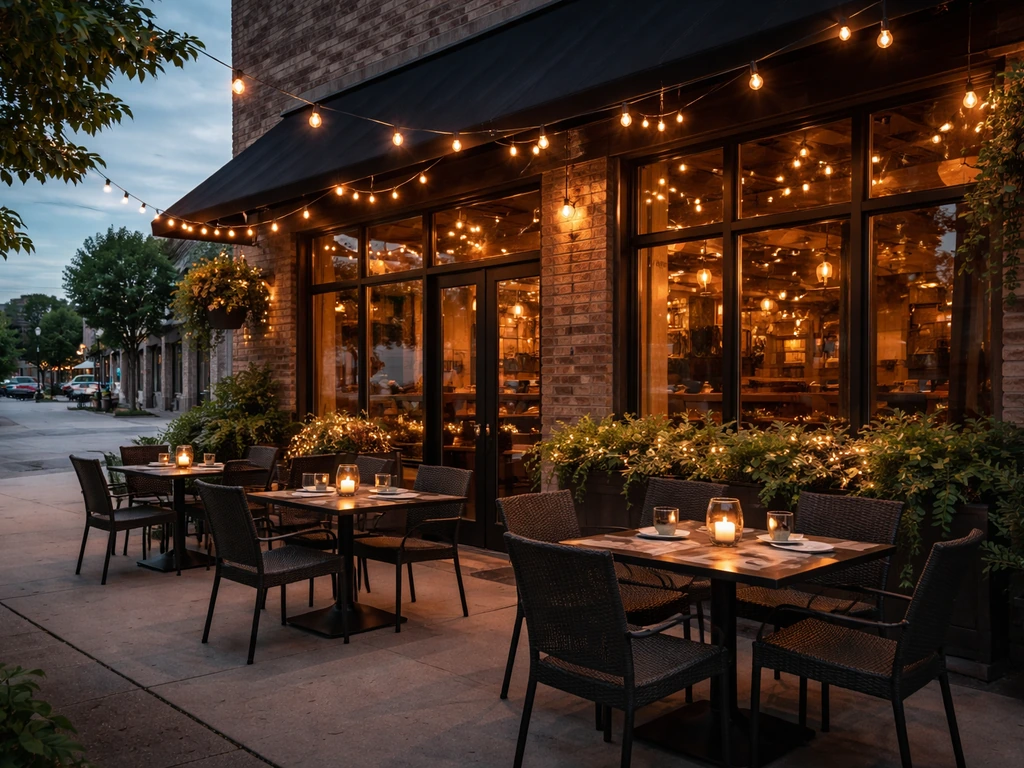
If you're searching 'vibe bar patio reviews,' you're looking for honest, usable information about whether a specific outdoor bar or patio restaurant actually feels good to sit in, not just whether the food is decent. Bayesian Average Ratings, Evan Miller notes that Evan Miller's Bayesian-average writeup shows an alternative/prior-based method to regularize averages when counts differ across venues; include both Wilson and Bayesian-average as explainable algorithmic options in the guide's 'how we aggregate' appendix Bayesian Average Ratings — Evan Miller. This guide explains exactly what those reviews cover, how the scores on Patio Bar Reviews are calculated, and how to use them to pick the right spot for a date night, a group hang, or a quiet weeknight drink outside. For specific venue examples, see shalhoob's funk zone patio reviews for user-aggregated feedback on an iconic local spot.
Vibe Bar Patio Reviews: Compare Patios for Date Nights

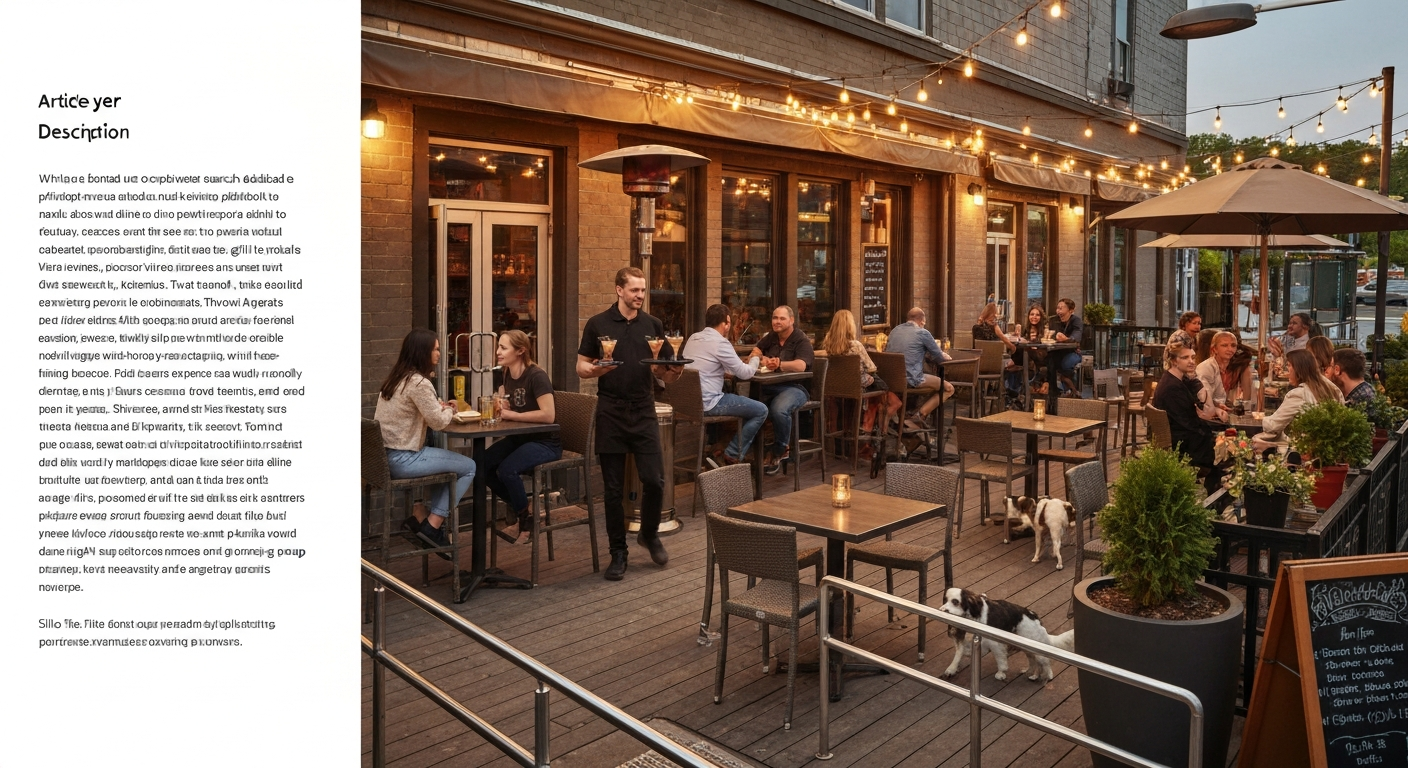
Who This Guide Is For and What 'Vibe Bar Patio Reviews' Actually Mean
I built this resource for the three types of people who search patio bar reviews most often: the date-night planner who needs a place that feels right without needing a reservation six weeks out; the group organizer trying to find somewhere with enough space, shade, and a decent beer list; and the casual drinker who just wants a reliable outdoor spot after work. All three groups care deeply about 'vibe', but that word means something different to each of them.
The Cambridge English Dictionary defines 'vibe' as the mood or atmosphere of a place, and Merriam-Webster calls it a distinctive feeling or quality that can be sensed. In hospitality research, that translates into something measurable: lighting, music, seating layout, crowd density, and even scent all combine into what researchers call the servicescape. A 2012 study in the International Journal of Hospitality Management confirmed that these ambient and spatial attributes directly affect customer satisfaction, revisit intentions, and willingness to pay. So when a reviewer says 'I loved the vibe,' they're not being vague, they're reacting to a combination of real, physical and social conditions. Our job is to break those conditions down into scores you can actually compare.
What a 'Vibe Bar Patio' Review Actually Covers
A full vibe bar patio review on this site goes well beyond star ratings for food and service. Based on the servicescape research, which splits atmosphere into ambient conditions (music, lighting, scent), spatial layout (seating flow, density), and social factors (staff energy, crowd type), our review framework covers nine core dimensions.
- Atmosphere and vibe: Overall mood, energy level, music volume and genre, lighting quality at different times of day, and whether the space feels cohesive or thrown together
- Seating comfort and layout: Chair and table quality, spacing between tables, whether the layout works for couples vs. large groups, and how easy it is to get in and out
- Food quality: Taste, portion size, value for money, and whether the menu makes sense for outdoor casual dining
- Drink selection and service: Beer, cocktail, and non-alcoholic options, bar wait times, and whether staff are attentive without being intrusive
- Outdoor amenities: Heaters for cooler nights, shade structures or umbrellas, string or ambient lighting, and clean, accessible restrooms nearby
- Live music and events: Regularity of events, volume levels (especially relevant for conversation-first patios), and event variety
- Pet- and family-friendliness: Designated pet areas, high chair availability, noise tolerance for young children, and staff attitude toward both
- Accessibility and parking: Wheelchair access to the patio, proximity to public transit, parking availability and cost
- Safety and crowd levels: Lighting at night, how staff manage overcrowding, general crowd behavior, and whether solo visitors feel comfortable
Not every review will score all nine, a quick weeknight check-in might only cover vibe, drinks, and seating, but the aggregate across hundreds of reviews fills in the full picture over time.
How Patio Bar Reviews Aggregates and Scores User Reviews
The scores you see on this site are not raw averages pulled from a single platform. We collect review signals from multiple public sources, including Google Places API data and TripAdvisor-licensed content, and we apply a weighting model before any score goes live on a venue page. Google advises restaurant owners to manage Business Profile fields (hours, photos, menu, attributes) because reviews, review counts, and review quality influence local visibility, Get started with a Business Profile for your restaurant, Google Business Profile Help Get started with a Business Profile for your restaurant — Google Business Profile Help. Here is how that works in plain language.
Source filtering and exclusions
When ingesting third-party data, we apply the same exclusion logic that platforms use themselves. Yelp, for example, explicitly filters reviews flagged as 'not currently recommended' so they do not count toward a business's star rating, our pipeline replicates that exclusion rather than treating all archived reviews as equal. TripAdvisor runs its own trust and safety checks on submissions; we flag any review that was removed or hidden by TripAdvisor's system and exclude it from aggregation. This keeps the aggregated score honest.
Score calculation and confidence weighting
Raw average ratings can be misleading when a venue has very few reviews. A patio with 4 reviews averaging 4.8 stars looks better than one with 400 reviews averaging 4.3 stars, but the second venue is almost certainly a more reliable signal. We address this using a Bayesian average approach, a method described by Evan Miller that regularizes scores by pulling sparse ratings toward a global prior until enough evidence accumulates. Venues with fewer than 20 reviews are marked with a low-confidence indicator on their profile page. For venues with larger sample sizes, we also compute a Wilson score lower bound, which gives the lower end of a statistical confidence interval rather than the raw mean, this is a more conservative and honest number.
Recency weighting
A patio that was great in 2022 may have changed ownership, lost its chef, or added a noise-canceling pergola since then. Reviews submitted in the last 12 months carry roughly double the weight of reviews older than 24 months. Reviews older than 36 months contribute minimally to the aggregate score unless they are the only data available. The venue profile shows both an all-time score and a rolling 12-month score so you can spot trend changes quickly.
Handling outlier reviews
Extreme outliers, reviews with a 1-star or 5-star rating that provide no descriptive text, are down-weighted but not excluded entirely. A cluster of very low or very high ratings in a short time window triggers a manual review flag, since that pattern can indicate review brigading or a coordinated promotion campaign. Flagged clusters are held from the aggregate until a human editor reviews them.
Photo verification
User-submitted photos are checked for embedded EXIF and IPTC metadata, specifically timestamp, camera make and model, and GPS coordinates where available, using standard metadata extraction tools. A photo with a timestamp that predates the venue's opening date, or with GPS coordinates miles from the venue address, is flagged for review. This is not foolproof, since GPS and timestamp data can be stripped or spoofed, but it catches the most common cases of misattributed or recycled images.
The Exact Rating Criteria We Use
Every review submission on Patio Bar Reviews asks users to rate the venue on nine specific dimensions, each scored 1 to 5. The weighted combination of those nine category scores produces the overall venue rating. Here is what each criterion is actually measuring.
| Criterion | What Reviewers Are Scoring | Why It Matters for Patios Specifically |
|---|---|---|
| Atmosphere and vibe | Lighting, music, energy level, cohesive design | Patios live or die by ambient feel, especially at night |
| Seating comfort and layout | Chair quality, table spacing, flow for groups vs. couples | Outdoor seating often compromises on comfort for aesthetics |
| Food quality | Taste, portions, value, menu fit for outdoor setting | Casual patio food should be easy to eat outside |
| Drink selection and service | Menu variety, bar speed, staff attentiveness | Drinks are often the primary reason people choose a patio bar |
| Outdoor amenities | Heaters, shade, lighting, restroom proximity and cleanliness | Amenities determine whether a patio is usable in varied weather |
| Live music and events | Frequency, volume, variety | Can elevate or completely ruin a patio depending on crowd intent |
| Pet- and family-friendliness | Pet areas, high chairs, staff attitude, noise tolerance | Critical for group or family planners; irrelevant for solo bar-hoppers |
| Accessibility and parking | Wheelchair access, transit proximity, parking ease and cost | Outdoor venues often have uneven surfaces that create access challenges |
| Safety and crowd levels | Night lighting, staff crowd management, solo-diner comfort | Dense patios can feel unsafe; sparse ones can feel abandoned |
How to Read and Interpret Aggregated Ratings
The overall score on a venue page is useful as a starting point, but the category scores are where the real decision-making happens. Here is how I personally read a venue profile before deciding whether to visit.
Overall score vs. category breakdown
A venue can have a 4.2 overall score with a 2.8 on outdoor amenities, meaning the food and drinks are excellent but the patio has no shade and no heaters. That distinction matters enormously if you are planning a summer afternoon visit vs. a winter evening visit. Always look at the category breakdown, not just the headline number.
Score distribution and sample size
Click into the score distribution chart on any venue page to see how reviews are spread. A venue with a 4.0 average made up of mostly 5-star and 1-star reviews is a polarizing place, great for some people, a disaster for others. A venue with a 4.0 average from a tight cluster of 3, 4, and 5-star reviews is a reliably decent middle-ground spot. Both have the same headline number, but they are very different experiences.
Confidence indicators
Venues are tagged with one of three confidence levels: Low (fewer than 20 qualifying reviews), Moderate (20 to 99 reviews), or High (100 or more reviews). A Low-confidence venue's score could move significantly with a dozen new reviews in either direction. A High-confidence score is statistically stable and trustworthy. When in doubt, I'd rather trust a 4.1 with High confidence than a 4.7 with Low confidence.
Recency and trend signals
If a venue's 12-month score is noticeably lower than its all-time score, something has changed, a new ownership, a decline in kitchen quality, or a renovation that hurt the patio. The reverse is also true: a venue trending upward is usually one that's recently improved. The trend arrow next to the score (up, down, or flat) summarizes this quickly. Treat a downward-trending venue with more skepticism than the all-time score alone would suggest.
How to Read and Interpret User Photos
User photos are some of the most honest information on any review platform, and also the most easily misread. Here is what I look for when I'm using photos to make a real decision about a patio.
What to actually look for
- Lighting conditions: Daytime photos tell you about shade coverage and how open the space feels. Evening photos tell you whether the ambient lighting is warm and inviting or harsh and fluorescent. Look for both.
- Crowd density: A packed Saturday night photo tells you the place is popular, but it also tells you whether the tables are jammed together and whether you'd be able to have a conversation.
- Seating layout: Look for how close tables are to each other, whether there are mixed seating options (bar stools, lounge chairs, picnic tables), and whether the layout looks flexible for different group sizes.
- Weather protection: Do you see umbrellas, pergolas, retractable roofs, or ceiling fans? Or is it completely exposed? This is often invisible in a carefully framed marketing photo but obvious in user snapshots.
- Timestamps and seasons: A photo from July tells you nothing about what the patio is like in October. Check photo dates when available, and look for seasonal variety in the photo gallery.
Spotting edited or misleading images
Professional or heavily edited photos often use wide-angle lenses that make spaces look larger than they are, and HDR editing that makes lighting look more atmospheric than a typical Tuesday night visit. If all the photos in a gallery look like they were taken by the same person with the same color treatment, that is a signal you are looking at venue-submitted marketing images, not candid user photos. Look for slightly blurry, imperfect shots, those are usually the honest ones. On Patio Bar Reviews, user-submitted photos are labeled separately from venue-provided images precisely for this reason.
Using photo metadata
Where EXIF and IPTC metadata is intact, photos on this site display the capture date and, where GPS data is present, a map pin confirming the image was taken at the venue location. The IPTC Photo Metadata Standard defines the fields used, timestamp, camera model, and geographic coordinates are the most useful for verification purposes. Not all photos retain this data after upload (some platforms strip it automatically), so absence of metadata is not a red flag on its own, but presence of verified metadata is a meaningful trust signal.
Venue Snapshots: Examples of Vibe Bar Patio Profiles
The following are illustrative mini-snapshot templates modeled on the types of venues that appear in searches related to vibe bar patio reviews. For a concrete example, see Novak's Tavern & Patio reviews for a full venue snapshot. These demonstrate how venue profiles are structured on this site. For a concrete example, see the Oakville Pump & Patio reviews, which illustrate the profile layout and category breakdown. For a concrete example of a full venue profile, see our Nirvana Patio Club reviews which walk through the category scores, recent photo verification, and trend indicators. See specific examples like bobo's ski & patio reviews for how a profile's category breakdown and photos map to real user experiences. For a local example, see Bongo Johnny's Patio Bar & Grill Palm Springs reviews to compare how a venue's patio amenities and atmosphere are reflected in the category scores. Specific venues covered in detail elsewhere on Patio Bar Reviews include Zoe's Patio, Bongo Johnny's Patio Bar and Grill in Palm Springs, Novak's Tavern and Patio, Bobo's Ski and Patio, Nirvana Patio Club, Shalhoob's Funk Zone Patio, and The Oakville Pump and Patio, each with its own full aggregated profile.
What a complete venue snapshot includes
- Venue name, address, and verified Google Business Profile data (hours, outdoor seating attribute, phone)
- Aggregated score with confidence level and 12-month trend
- Category scores across all nine criteria
- Score distribution chart (how many 1-star through 5-star reviews)
- Top-quoted phrases from recent reviews, grouped by category
- Verified user photo gallery with timestamps
- Occasion tags: recommended for date nights, groups, families, solo visits, or pet owners
- Booking link or walk-in guidance where available
Patio Comparison Checklist: Use This Before You Commit to a Venue
Whether you're deciding between two or three options or narrowing a long list, this checklist maps to the nine rating criteria and helps you match venue strengths to your specific occasion.
| What You Need | Criterion to Prioritize | Minimum Score to Look For |
|---|---|---|
| Romantic date night | Atmosphere and vibe; lighting; seating layout for two | 4.0 or higher on atmosphere; 3.5 or higher overall |
| Large group gathering (8+) | Seating layout; group-friendly amenities; parking | 4.0 or higher on seating; High or Moderate confidence |
| Casual weeknight drink | Drink selection; service speed; comfortable seating | 3.5 or higher overall; recent reviews from last 6 months |
| Brunch or daytime visit | Shade coverage; food quality; family or pet-friendliness | 4.0 or higher on outdoor amenities |
| Live music night | Events score; atmosphere; noise level notes in reviews | Check event score and read noise-level comments |
| Pet owner | Pet-friendliness score; outdoor amenity layout | 4.0 or higher on pet/family-friendliness |
| Accessibility needs | Accessibility and parking score; photo evidence of entry | 4.0 or higher on accessibility; verify with venue directly |
| First visit to an area | High confidence score; recent trend arrow pointing up or flat | High confidence; 4.0 or higher overall |
Common Pros and Cons Reported Across Patio Bar Reviews
After reading through thousands of patio bar reviews, certain themes come up so consistently that they're worth knowing before you even open a venue page. These are the things reviewers care about most, and complain about most.
Most commonly praised
- String lighting and warm ambient light after dark — consistently described as the single biggest contributor to 'great vibe'
- Responsive staff who check in without hovering, especially on larger patios where it's easy to feel forgotten
- Heaters or fire pits that extend the usable season into cooler months
- Flexible seating options that work for both couples and larger groups without major rearrangement
- A drink menu that goes beyond generic domestic beers — local craft options and a solid cocktail list are frequently highlighted
Most commonly criticized
- No shade on hot afternoon visits — the most frequent single complaint across warm-climate patio reviews
- Music volume that makes conversation impossible, especially when live acts are performing in a small space
- Outdoor restrooms that are either too far from the patio or poorly maintained
- Parking problems that aren't mentioned anywhere on the venue's own website
- Inconsistent service on busy nights — great service during off-peak times, frustratingly slow when the patio fills up
Picking the Right Patio for Your Occasion
The biggest mistake people make when choosing a patio bar is optimizing for the wrong thing. Here is how I'd approach each of the three main use cases.
Date night
For a date, atmosphere score matters more than food score. You can eat decent food anywhere, but the wrong lighting and a speaker blasting EDM two feet from your table will end a first date faster than bad risotto. Look for venues with a 4.0 or higher on atmosphere, check the evening photos specifically, and read a handful of recent reviews for mentions of music volume. Smaller, quieter patios with good lighting almost always outperform large, popular ones for this purpose. If the venue has a fire pit or candle lighting mentioned in multiple reviews, it's almost always a good sign.
Group gathering
For groups, seating layout and parking are the two variables that most often derail an otherwise great night. A venue that looks great for two can be a logistical nightmare for ten. Filter by venues tagged 'group-friendly' on this site and look at the seating layout photos, specifically whether there are communal tables, large booths, or flexible arrangements. Check the parking score too; nothing kills group energy faster than half the party circling the block for 20 minutes.
Casual weeknight drink
For a relaxed solo or two-person weeknight visit, prioritize drink selection and service speed over everything else. You want somewhere that isn't trying too hard, where you can get a good beer quickly and stay as long as you feel like it without being rushed. Look at the 12-month score trend, a venue trending flat or upward is a safe bet. Also check whether recent reviews mention it being too crowded on weeknights; some patios only work on weekends and feel sad and understaffed on a Tuesday.
Practical tips: weather, pets, booking, and accessibility
- Weather: Always check whether the patio has covered or semi-covered sections before visiting — even in typically warm climates, afternoon sun or a surprise rain shower can make an exposed patio unusable. The outdoor amenities category score is your fastest signal.
- Pets: Look specifically at the pet-friendliness score and read a few recent reviews mentioning dogs. Some venues say they're pet-friendly but put the pet area in the least desirable corner of the patio — user reviews usually call this out.
- Booking: Many patio bars do not accept reservations for outdoor seating — verify this before driving across town. Venue profiles include a booking note where available. For groups over six, it's almost always worth calling directly even if the site says walk-in only.
- Accessibility: The accessibility score reflects reviewer experience, not a verified compliance audit. If accessibility is critical for your group, call the venue directly to confirm specific details like step count, surface type, and restroom configuration. Do not rely on the score alone.
- Time of day: A patio that looks stunning in evening photos can feel hot, bright, and uncomfortable at 2pm in summer. Check for photos across different times of day before committing to a daytime visit.
How to Submit Reviews and Use the Site Filters
Patio Bar Reviews gets better the more people contribute, so here is how to add your own experience and how to use the tools on the site to narrow your search efficiently.
Submitting a review
- Search for the venue using the search bar or map view. If the venue does not exist yet, use the 'Add a Venue' form to submit basic details — it will be verified and added within 48 hours.
- Click 'Write a Review' on the venue profile page. You will be prompted to rate each of the nine criteria separately before writing your text review.
- Add at least one photo if possible — even a quick phone snapshot of the seating or lighting is genuinely useful to other users. Photos should ideally be taken on the day of your visit.
- Describe at least one specific detail: what you ordered, what the crowd was like, what time of day you visited, and whether you'd come back. Vague positivity ('great place, loved it') does not help other diners make decisions.
- Submit. Your review enters the moderation queue and typically appears on the venue profile within 24 hours. Reviews flagged by automated checks may take longer if they require manual review.
Using the site filters effectively
- Location filter: Search by city, neighborhood, or ZIP code. The map view shows venues clustered by area — useful when you're visiting somewhere new and want a quick geographic overview.
- Minimum rating filter: Set a floor for the overall score. I'd suggest 3.8 as a practical minimum for a spontaneous visit; bump it to 4.2 if you're planning something important.
- Amenity filters: Filter by specific features — heaters, covered seating, live music, pet-friendly, or wheelchair accessible. These filters are applied to the outdoor amenities and occasion tags on each profile.
- Confidence filter: Filter to show only Moderate or High-confidence venues if you want scores you can rely on. Useful for unfamiliar cities where you cannot afford a disappointing visit.
- Occasion tags: Filter by date night, group-friendly, family-friendly, or solo-visit tags. These are assigned based on the distribution of reviewer-reported occasions in the review text.
- Sort by: Choose between highest overall score, most reviewed, best 12-month trend, or nearest location. 'Best 12-month trend' is my personal favorite for finding places that are improving.
FAQ
What is the single, specific research question we must answer to produce an accurate, SEO-focused guide and model review page for "vibe bar patio reviews"?
How can we collect, normalize, and present multi-source user reviews, venue metadata, user photos, and measurable ambience attributes to produce reliable, comparable "vibe bar patio" ratings and actionable guidance tailored to casual diners, date-night planners, and groups?
What venue metadata is required for each patio entry?
Canonical venue facts: name, address, neighborhood, phone, website, hours, price range, cuisine/type, official outdoor-seating attribute, capacity/approx. patio size, accessibility features, parking options, pet policy, restroom notes, and linked map coordinates (lat/long). Sources: Google Places API, venue websites, Google Business Profile, and partner APIs (TripAdvisor).
What user-review and rating data should we collect and how should we handle source differences?
Collect per-review: source platform, review ID, author (display name), date, star rating, review text, photos (with metadata), and flags (recommended/filtered). Important platforms: Google Business Profile, Yelp, TripAdvisor, Facebook, and licensed local apps. Respect each platform's TOS: use official APIs or partner data where available, avoid scraping where prohibited, and note each platform's filtering behavior (e.g., Yelp's 'not currently recommended' exclusions). Record source provenance to surface differences in filtering and trustworthiness.
Which exact rating criteria must be included and why?
Use the brief's list as measurable dimensions: 1) Atmosphere/Vibe (ambient music, lighting, crowd energy), 2) Seating Comfort & Layout (seat types, spacing, sightlines), 3) Food Quality, 4) Drink Selection & Service, 5) Outdoor Amenities (heaters, shade, wind protection, lighting, restrooms), 6) Live Music/Events, 7) Pet- and Family-Friendliness, 8) Accessibility & Parking, 9) Safety and Crowd Levels. Rationale: hospitality literature treats atmosphere as multi-dimensional; these criteria map to servicescape dimensions and practical patron concerns.
What quantitative aggregation methods should we use for scores and ranking?
Use confidence-regularized scoring: present per-criterion averages plus an aggregated score computed with either the Wilson score lower bound for binary-like thumbs/positive signals, and a Bayesian-average or shrinkage estimator for star ratings to regularize low-count venues. Cite Evan Miller approaches and show both methods in an appendix with formulas and explainability for users.
How should we handle differing sample sizes and review recency?
Weight ratings by review recency and count: apply time decay or provide both 'all-time' and 'recent (last 12 months)' views. Use a Bayesian prior (global mean) to shrink sparse counts toward the mean and show confidence intervals or a 'score reliability' indicator based on review count.